

Go to ShopCart

Mallu Aunty Hot Masala Desi Tamil Unseen Video Target Link [ 2024-2026 ]

System can't start normally? Easy way to access your data and repair your PC!

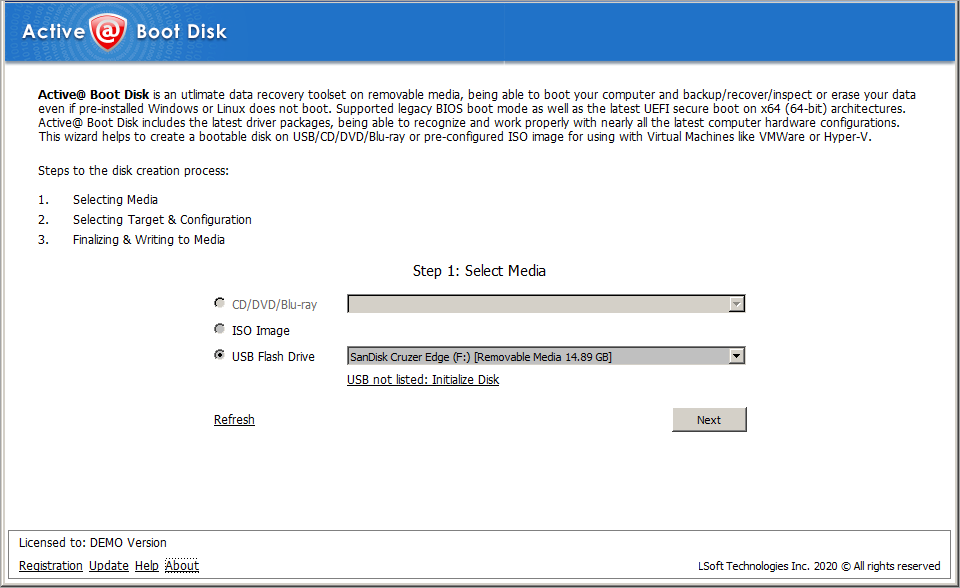
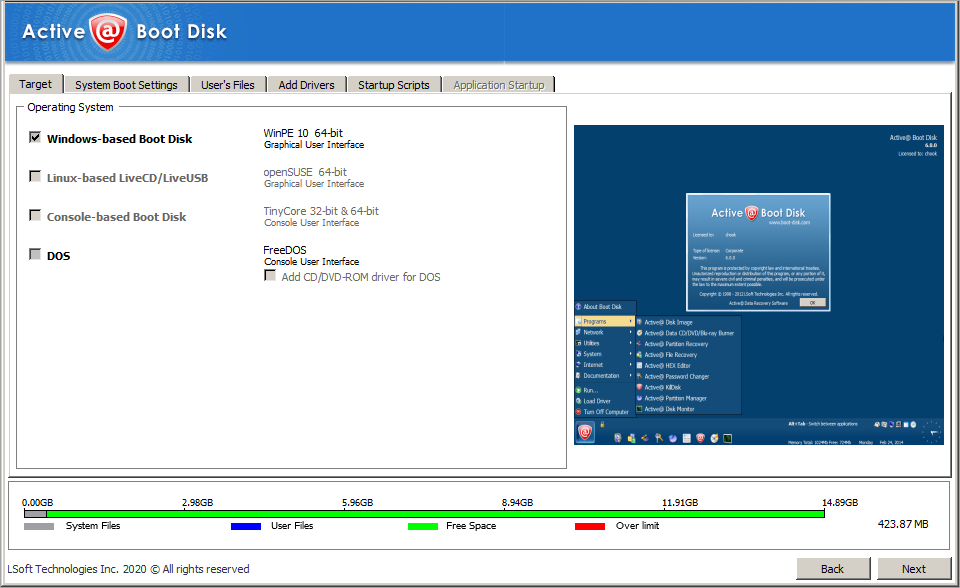
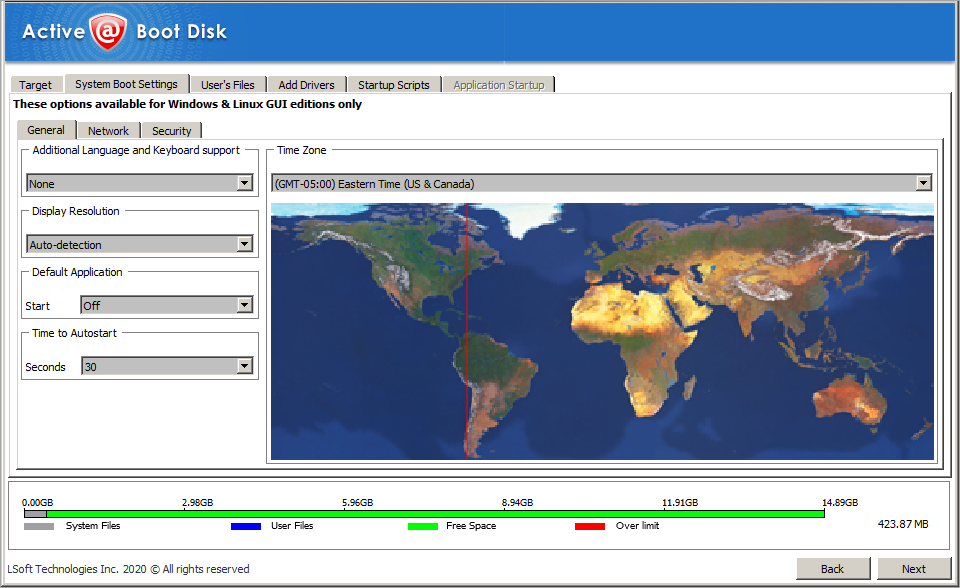
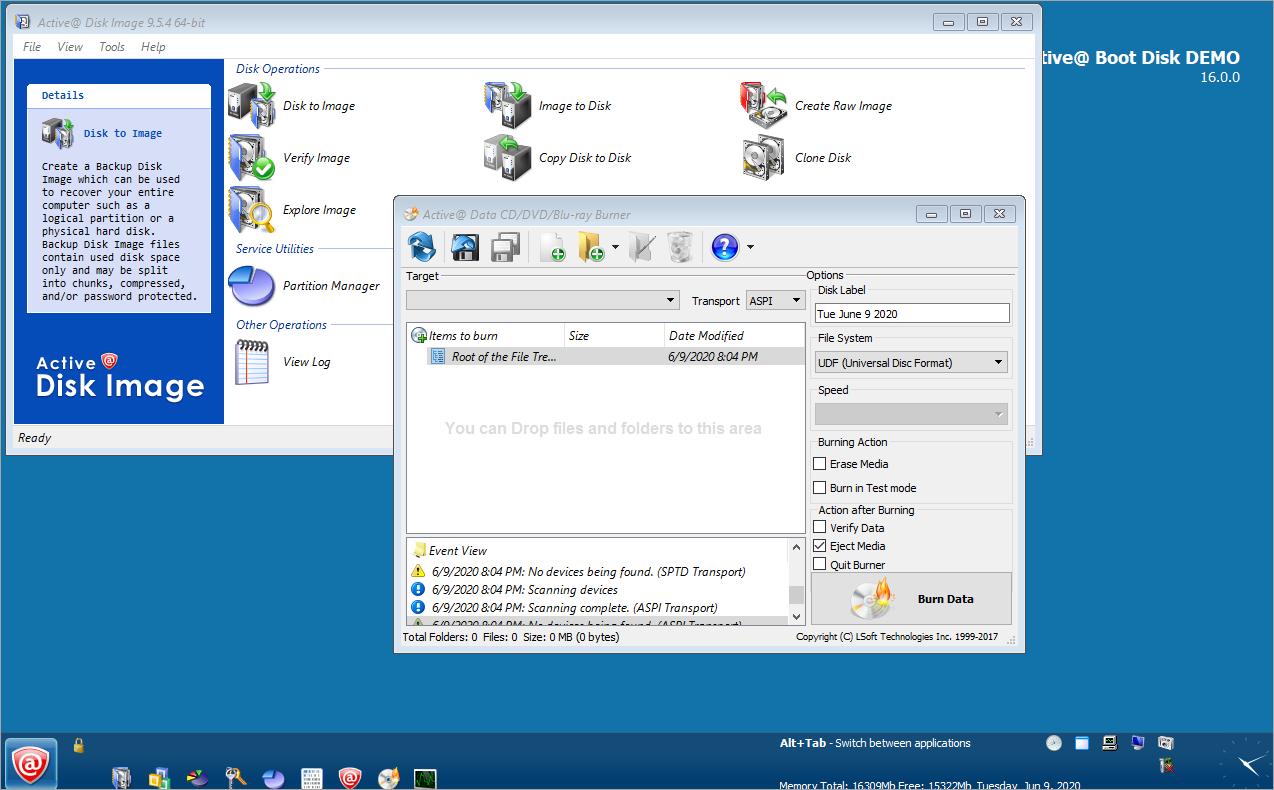
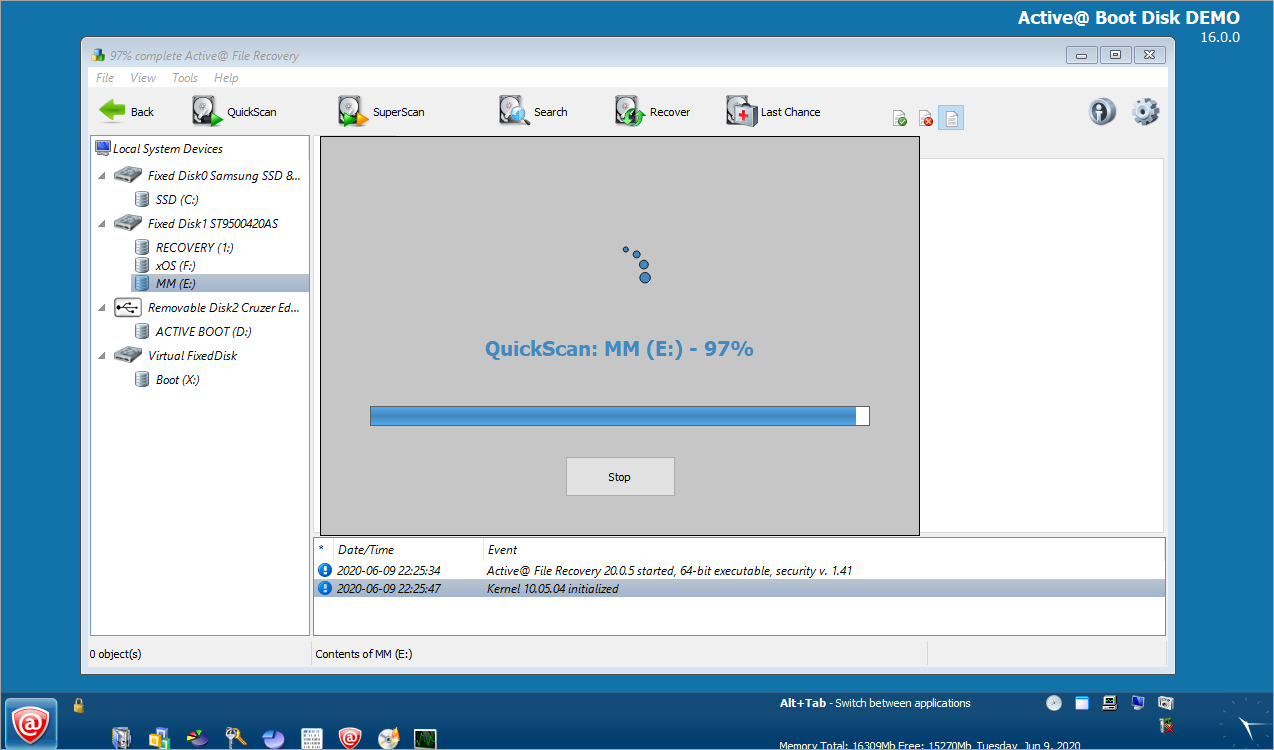
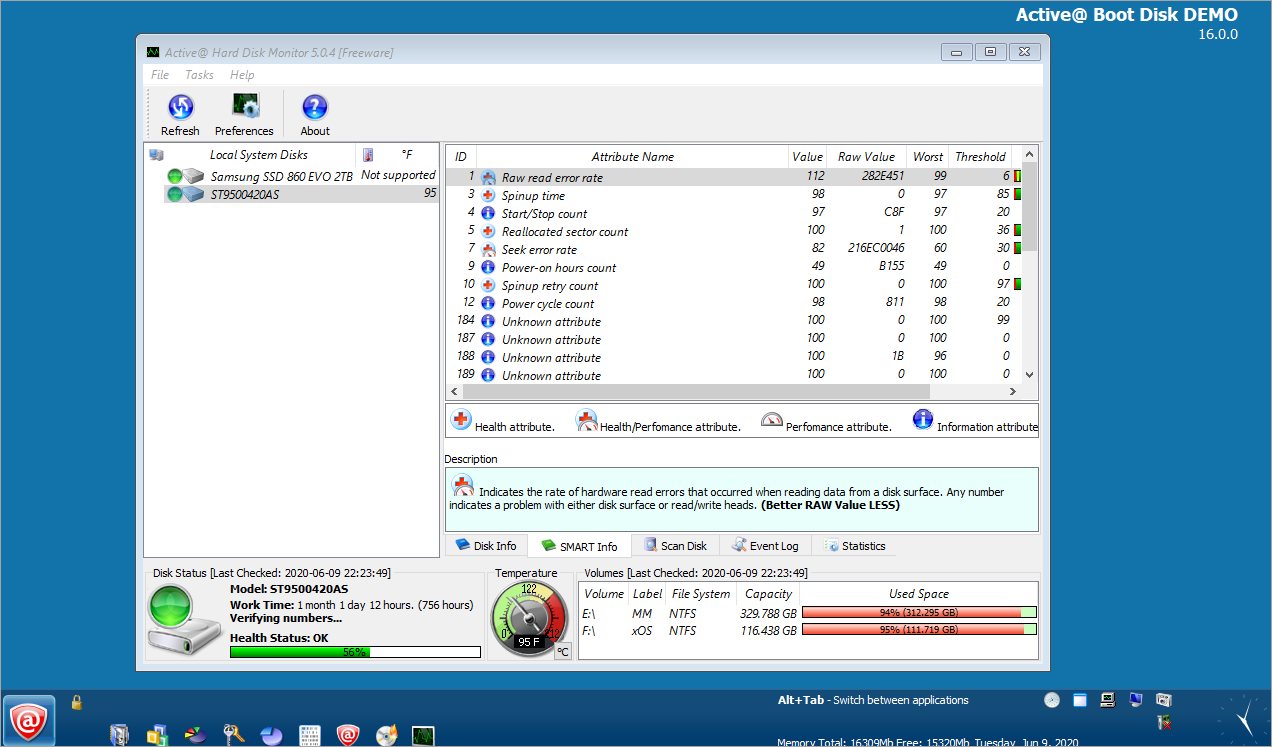
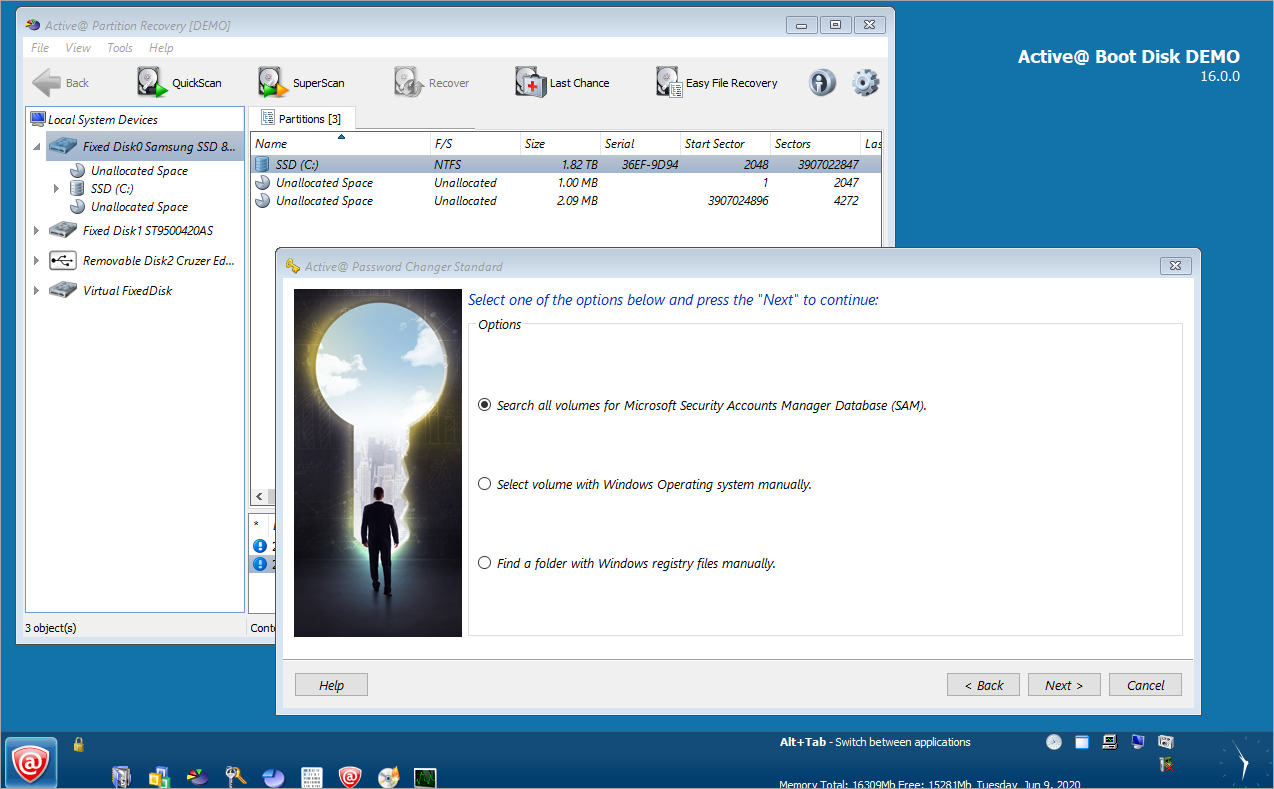
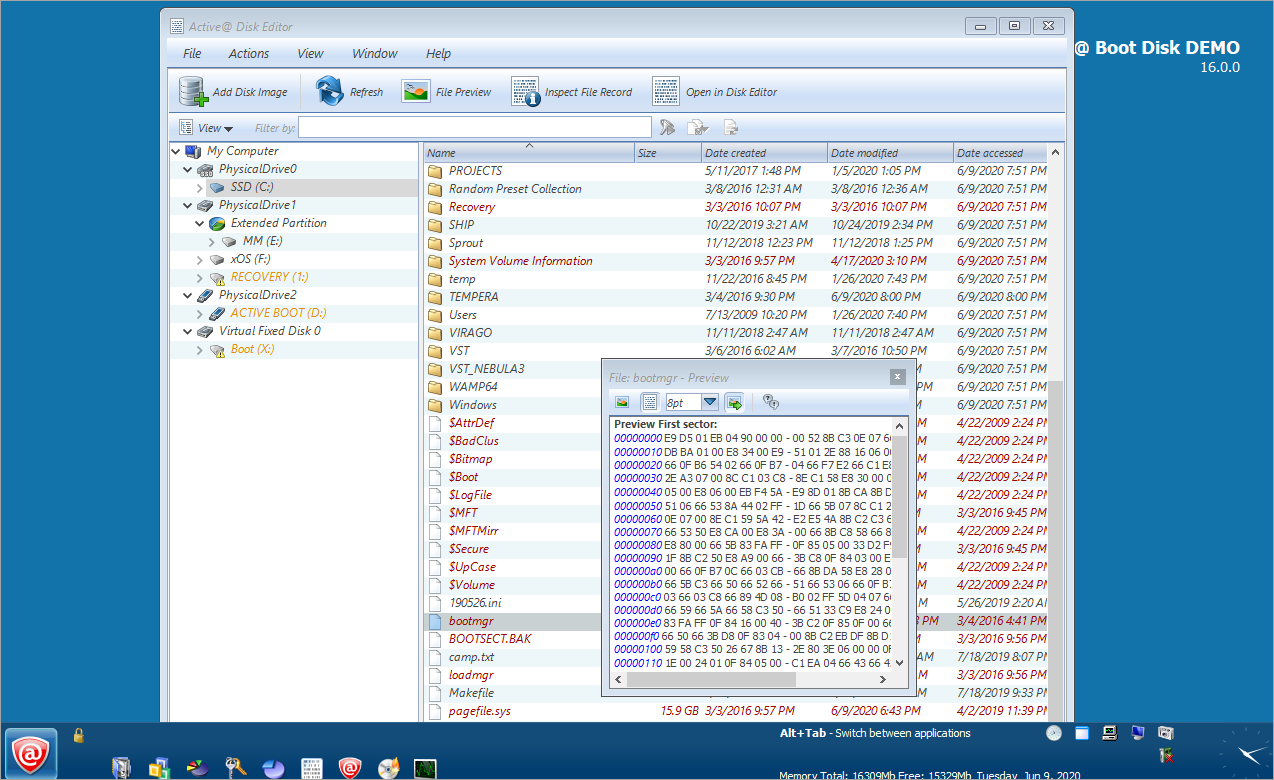
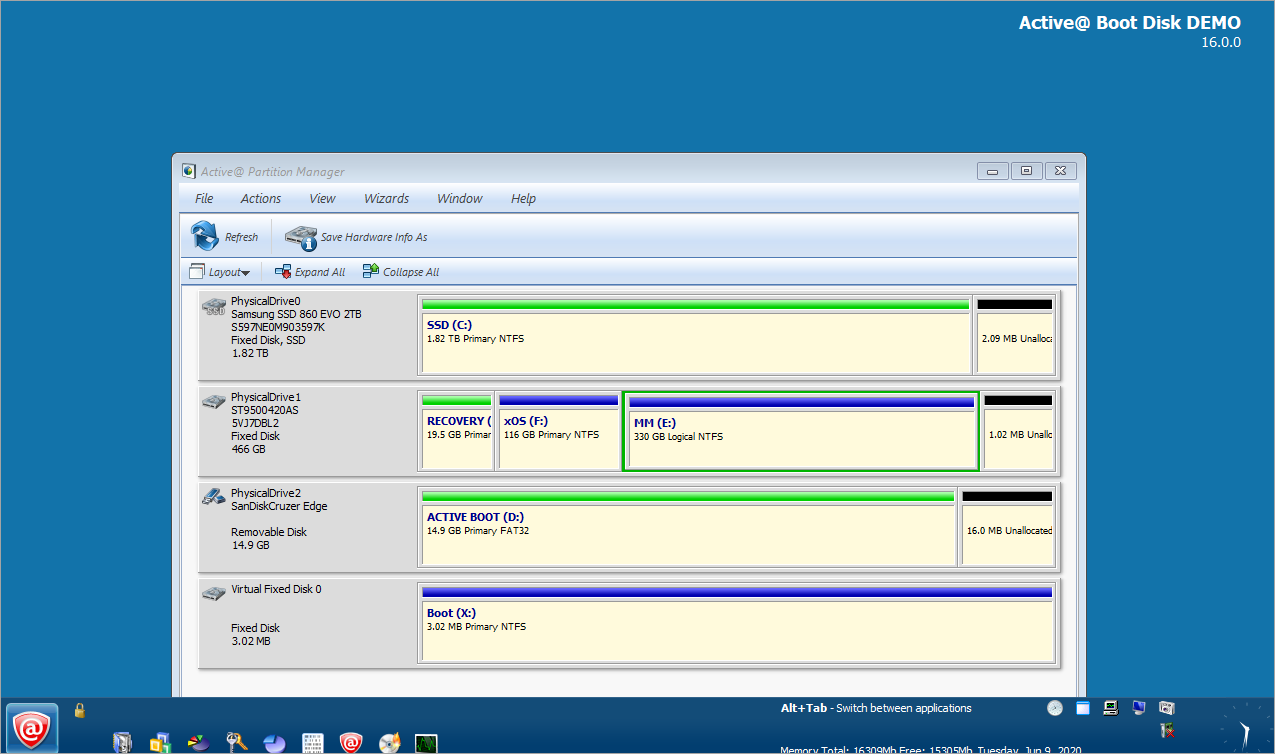
Active@ Boot Disk is a complete and functioning computer operating system on CD/DVD/USB disk. Boot Disk does not modify the operating system already installed on a computer's hard drive. It includes many tools to boot up a computer and fix most startup, PC configuration, and system management problems.

You can perform data recovery, creating and restoring backups, secure data erasure and a number of other tasks all from a bootable CD/DVD or USB flash media.

Active@ Boot Disk (Freeware Evaluation)

Boots x64/amd64 based machines such as these with Intel/AMD processors

Active@ Boot Disk ARM (Freeware Evaluation)

Boots ARM-based machines such as those with Snapdragon processors

Active@ Boot Disk 9 (32-bit WinPE 3.1-based) Freeware
quotation
Finally, we come to a boot disc that offers useful tools, is easy to use, and can be created for virtually any XP, Vista, Windows 7, 8 and 10 computer
Lincoln Spector
testimonial
mallu aunty hot masala desi tamil unseen video target link
Active@ Boot Disk Version 26.0.1
February 27, 2026
  • WinPE upgraded to Windows 11 26H1 base, v 10.0.28100
  • Added new storage drivers for Dell and HP devices
  • Active@ KillDisk 26
  • Active@ Disk Image 26
  • Active@ Disk Editor 26
  • Active@ File Recovery 26
  • Active@ Partition Recovery 26
  • Active@ Password Changer 26
Updates history

Furthermore, film music in Kerala holds a sophisticated space. Rooted heavily in Carnatic music, native folk traditions, and poetic lyrics written by legendary literary figures like O.N.V. Kurup and Kaithapram, the songs advance the narrative rather than serving as mere commercial disruptions. Challenges and the Path Forward

In the digital era, Malayalam cinema underwent a structural and aesthetic renaissance. Filmmakers like Dileesh Pothan, Lijo Jose Pellissery, Mahesh Narayanan, and Jeethu Joseph redefined cinematic grammar.

Malayalam cinema, colloquially known as Mollywood, is deeply intertwined with the cultural, social, and political fabric of Kerala, a coastal state in southern India. Unlike many commercial film industries that rely heavily on escapism, Malayalam cinema has carved out a distinct identity characterized by realism, narrative depth, and progressive themes. This article explores the evolution of Malayalam cinema and its profound connection to Keralite culture. The Historical Evolution and Social Roots

Cinema is the primary custodian of contemporary Kerala culture. The lush, monsoon-drenched landscapes of Alappuzha, the misty hills of Wayanad, and the bustling, multi-cultural streets of Kochi are not just backdrops; they function as living characters.

Culturally, Malayalam films are a testament to Kerala’s pluralistic society. The state’s history of religious harmony and social reform movements—such as those led by Narayana Guru—frequently informs the subtext of its movies. Whether it is the exploration of the decaying feudal systems in the 1980s or modern critiques of patriarchy and caste in the "New Wave" era, the industry acts as a space for public discourse. It does not shy away from uncomfortable truths, often challenging the status quo regarding gender roles, migration, and the impact of the Gulf diaspora on the local economy and family structure.

Culture and cinema in Kerala cannot be discussed without acknowledging the "Gulf Boom." Beginning in the 1970s, mass migration to the Middle East transformed Kerala’s economy and family structures. Cinema quickly adapted to mirror this phenomenon.

The essence of Malayalam cinema is its unwavering commitment to realism. Unlike many mainstream industries that lean heavily on high-octane action or fantastical plotlines, Malayalam cinema thrives on the ordinary life of ordinary people.

This film addressed untouchability and feudalism. It won the first national recognition for the industry.

The 1970s and 1980s are often referred to as the Golden Age of Malayalam cinema. This period saw the emergence of acclaimed filmmakers like Adoor Gopalakrishnan, K. S. Sethumadhavan, and I. V. Sasi. Their films explored complex themes, such as social inequality, politics, and human relationships, showcasing the artistic and intellectual depth of Malayalam cinema.

In the 2010s, Malayalam cinema underwent a structural and thematic revolution, often referred to as the "New Generation" wave. Filmmakers like Lijo Jose Pellissery, Dileesh Pothan, Mahesh Narayanan, and Syam Pushkaran rejected conventional song-and-dance formulas in favor of hyper-realism and micro-narratives.

This era was also anchored by the unparalleled acting prowess of Mammootty and Mohanlal. Their ability to transition seamlessly from larger-than-life heroic figures to deeply vulnerable, flawed commoners allowed directors to experiment with diverse themes, securing Malayalam cinema's reputation for performance-driven storytelling. The Gulf Boom and the Diaspora Identity

The COVID-19 pandemic and the subsequent boom of Over-The-Top (OTT) streaming platforms acts as a catalyst. Audiences across India and the globe discovered films like The Great Indian Kitchen (2021), a blistering critique of patriarchy entrenched in everyday domestic chores. Malayalam cinema was no longer a regional secret; it became a global benchmark for quality content. Cultural Aesthetics: Music, Language, and Landscape

Mallu Aunty's enduring popularity can be attributed to her memorable performances, charming on-screen presence, and relatability. Her characters often resonate with audiences, who appreciate her ability to portray complex emotions and everyday situations.

Cinema is the primary custodian of contemporary Kerala culture. The lush, monsoon-drenched landscapes of Alappuzha, the misty hills of Wayanad, and the bustling, multi-cultural streets of Kochi are not just backdrops; they function as living characters.

Pricing Table

Please choose the correct version and licensing model according to your business needs

Windows

Windows Installer
Windows-based Boot Disk

Licenses:
- +

$

Windows ARM

Windows Installer
Boot Disk for Snapdragon

Licenses:
- +

$

Suite

Windows Installer
Windows-based Boot Disk
TinyCore-based Console
Boot Disk for Snapdragon

Licenses:
- +

$

  • Personal license - for non-commercial purposes. The Personal License will be assigned to the individual's name.
  • Corporate license - for commercial use. With a Corporate License the company can use the program in a business, academic, or government environment.
  • Site license - provides unlimited licensing for corporation on one physical site or location.
  • Enterprise license - for large corporations and enterprises. It means that you can use software without of any limitations at all company's offices and branches (worldwide).

Mallu Aunty Hot Masala Desi Tamil Unseen Video Target Link [ 2024-2026 ]

Furthermore, film music in Kerala holds a sophisticated space. Rooted heavily in Carnatic music, native folk traditions, and poetic lyrics written by legendary literary figures like O.N.V. Kurup and Kaithapram, the songs advance the narrative rather than serving as mere commercial disruptions. Challenges and the Path Forward

In the digital era, Malayalam cinema underwent a structural and aesthetic renaissance. Filmmakers like Dileesh Pothan, Lijo Jose Pellissery, Mahesh Narayanan, and Jeethu Joseph redefined cinematic grammar.

Malayalam cinema, colloquially known as Mollywood, is deeply intertwined with the cultural, social, and political fabric of Kerala, a coastal state in southern India. Unlike many commercial film industries that rely heavily on escapism, Malayalam cinema has carved out a distinct identity characterized by realism, narrative depth, and progressive themes. This article explores the evolution of Malayalam cinema and its profound connection to Keralite culture. The Historical Evolution and Social Roots

Cinema is the primary custodian of contemporary Kerala culture. The lush, monsoon-drenched landscapes of Alappuzha, the misty hills of Wayanad, and the bustling, multi-cultural streets of Kochi are not just backdrops; they function as living characters. mallu aunty hot masala desi tamil unseen video target link

Culturally, Malayalam films are a testament to Kerala’s pluralistic society. The state’s history of religious harmony and social reform movements—such as those led by Narayana Guru—frequently informs the subtext of its movies. Whether it is the exploration of the decaying feudal systems in the 1980s or modern critiques of patriarchy and caste in the "New Wave" era, the industry acts as a space for public discourse. It does not shy away from uncomfortable truths, often challenging the status quo regarding gender roles, migration, and the impact of the Gulf diaspora on the local economy and family structure.

Culture and cinema in Kerala cannot be discussed without acknowledging the "Gulf Boom." Beginning in the 1970s, mass migration to the Middle East transformed Kerala’s economy and family structures. Cinema quickly adapted to mirror this phenomenon.

The essence of Malayalam cinema is its unwavering commitment to realism. Unlike many mainstream industries that lean heavily on high-octane action or fantastical plotlines, Malayalam cinema thrives on the ordinary life of ordinary people. Furthermore, film music in Kerala holds a sophisticated

This film addressed untouchability and feudalism. It won the first national recognition for the industry.

The 1970s and 1980s are often referred to as the Golden Age of Malayalam cinema. This period saw the emergence of acclaimed filmmakers like Adoor Gopalakrishnan, K. S. Sethumadhavan, and I. V. Sasi. Their films explored complex themes, such as social inequality, politics, and human relationships, showcasing the artistic and intellectual depth of Malayalam cinema.

In the 2010s, Malayalam cinema underwent a structural and thematic revolution, often referred to as the "New Generation" wave. Filmmakers like Lijo Jose Pellissery, Dileesh Pothan, Mahesh Narayanan, and Syam Pushkaran rejected conventional song-and-dance formulas in favor of hyper-realism and micro-narratives. Challenges and the Path Forward In the digital

This era was also anchored by the unparalleled acting prowess of Mammootty and Mohanlal. Their ability to transition seamlessly from larger-than-life heroic figures to deeply vulnerable, flawed commoners allowed directors to experiment with diverse themes, securing Malayalam cinema's reputation for performance-driven storytelling. The Gulf Boom and the Diaspora Identity

The COVID-19 pandemic and the subsequent boom of Over-The-Top (OTT) streaming platforms acts as a catalyst. Audiences across India and the globe discovered films like The Great Indian Kitchen (2021), a blistering critique of patriarchy entrenched in everyday domestic chores. Malayalam cinema was no longer a regional secret; it became a global benchmark for quality content. Cultural Aesthetics: Music, Language, and Landscape

Mallu Aunty's enduring popularity can be attributed to her memorable performances, charming on-screen presence, and relatability. Her characters often resonate with audiences, who appreciate her ability to portray complex emotions and everyday situations.

Cinema is the primary custodian of contemporary Kerala culture. The lush, monsoon-drenched landscapes of Alappuzha, the misty hills of Wayanad, and the bustling, multi-cultural streets of Kochi are not just backdrops; they function as living characters.

Boot Disk Review

Boot Disk Review

To continue the train of reviews on software developed by LSoft Technologies Inc., I'll be reviewing one of their core products: Active@ Boot Disk. What this software proves itself to be is a powerful disk utility tool that allows the user to create a portable, working bootable disk that...